
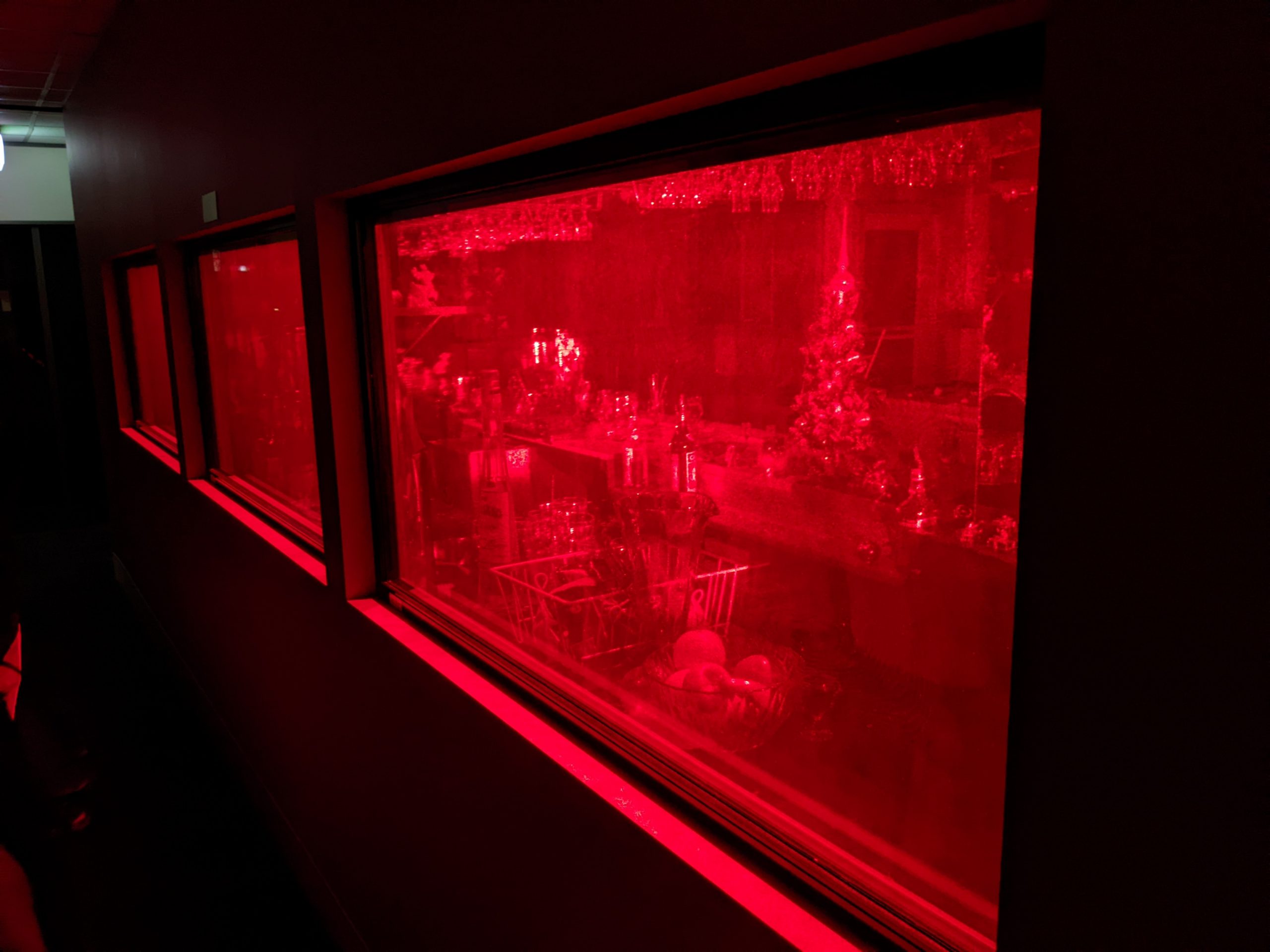
Last night (18 May 2022), in place of the usual lecture at the clubhouse, we got to visit the MQ Photonics Research Centre at Macquarie University for a presentation about lasers and photonics. Our hosts, Professor Helen Pask and some of her team of researchers, gave us a wonderful show of the wonders and applications of these technologies.
First port of call was the artwork, To Absent Friends, pictured above, one of the largest holograms in the world. It was commissioned by Janet and Robert Holmes a Court, and created at the National Acoustics Library in Sydney.
Looking through the three windows, you can view a bar at three different points in time: start of the evening when everything is nice and tidy, later on when there are partly-consumed drinks, and then at the end of the night.
Disconcertingly, part of the scene included a mirrored surface facing the viewer: we couldn’t see our reflections, so maybe we had turned into vampires!
(More about To Absent Friends here. If you have a library card, you can watch a documentary about the artwork.)
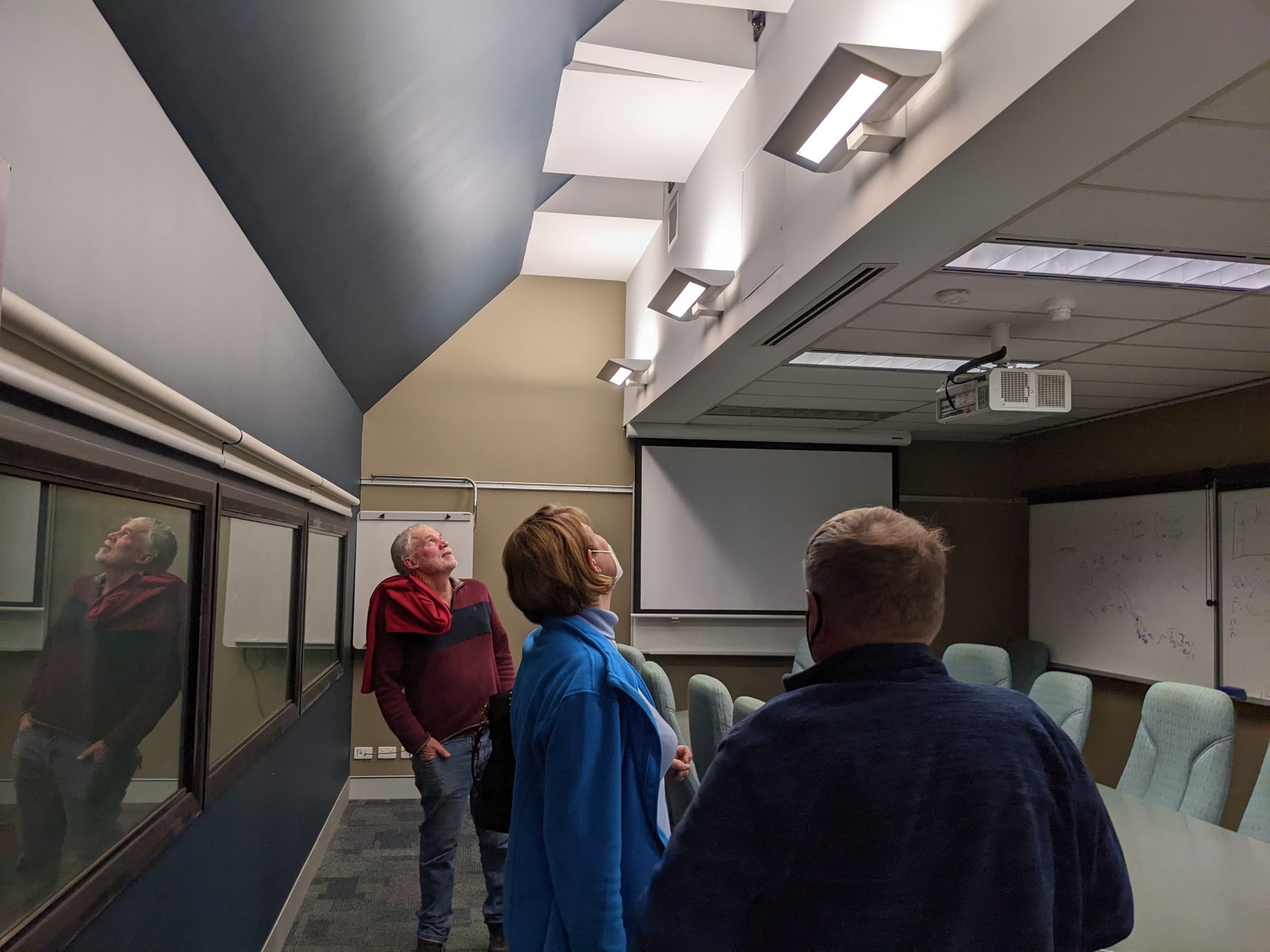
Afterwards, the lasers were turned off, so we could go behind the hologram: just an ordinary meeting room:
Next up, we were treated to refreshments and snacks (including a very tasty home-made pumpkin and sultana cake!), then Professor Pask and her team gave us an enjoyable and informative presentation about some of the other applications of photonics and laser technology.

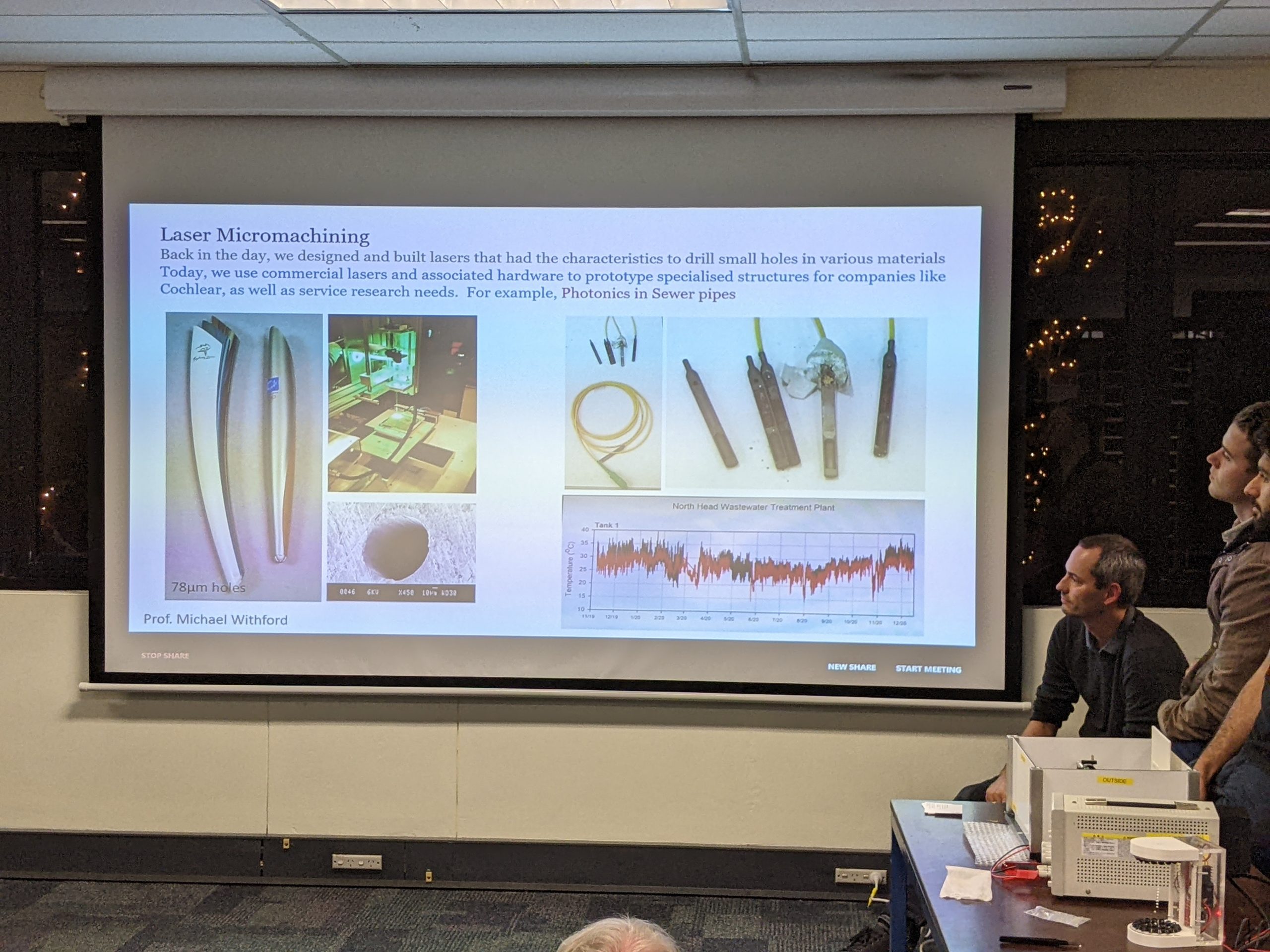
Some of the applications we learned of:
- Astronomy: activating sodium particles in the upper atmosphere to create an “artificial star”. How much the shape of the “star” deviates from a perfect circle allows ground-based telescopes to correct for atmospheric turbulence and get images of quality comparable to space-based telescopes.
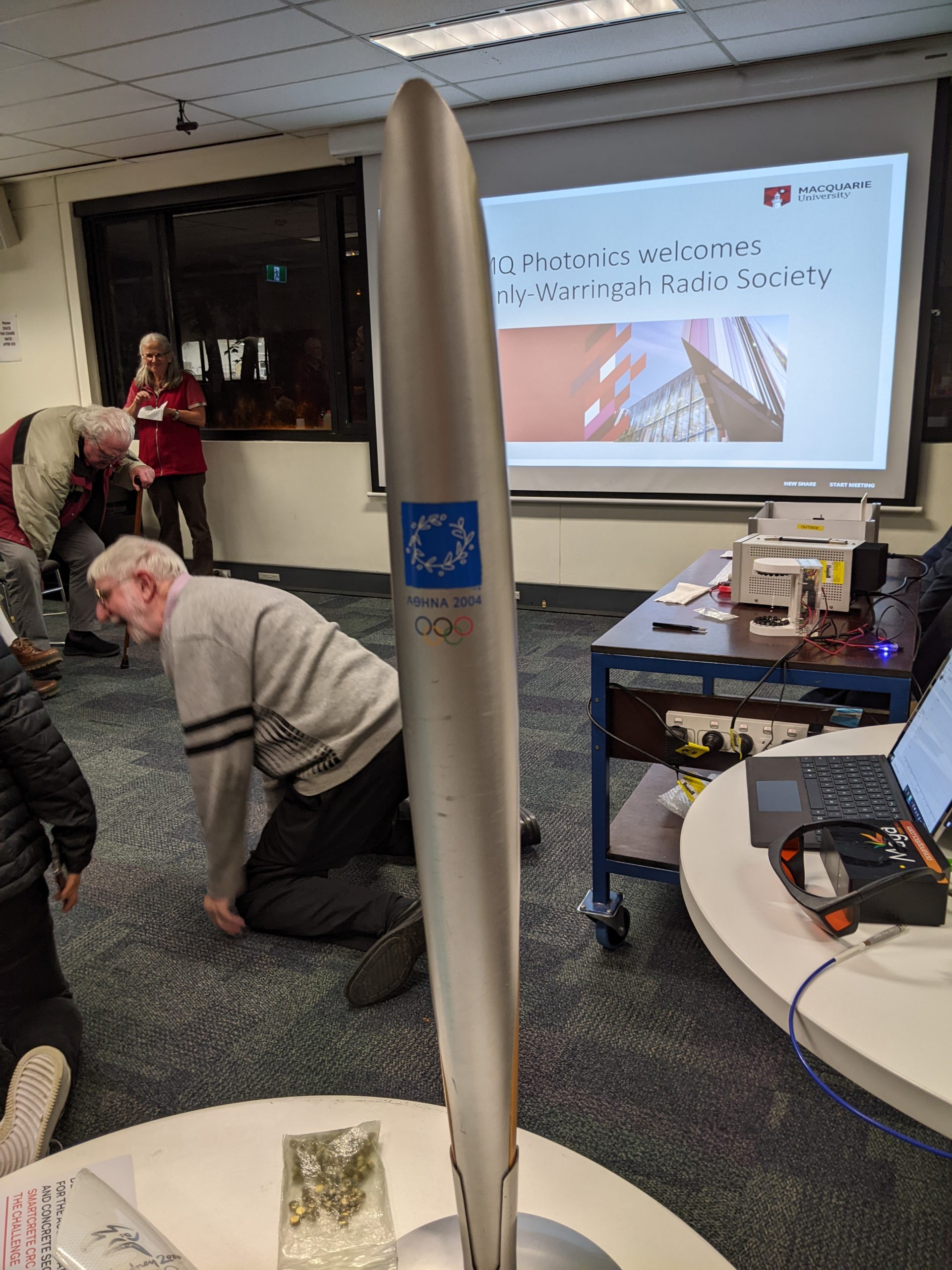
- Micromachining: extremely precise laser machining has uses in such diverse areas as cochlear implants, sewer pipe inspection, and Olympic torches, below.
- Environment: lasers mounted on ocean vessels can be used to measure water temperatures to depths of tens of metres (satellites can only measure temperatures on the very surface.)
- Defence: we saw a demonstration video of high powered lasers destroying consumer-grade drones from a distance of over a kilometre, and burning holes in metal plates over a similar distance.
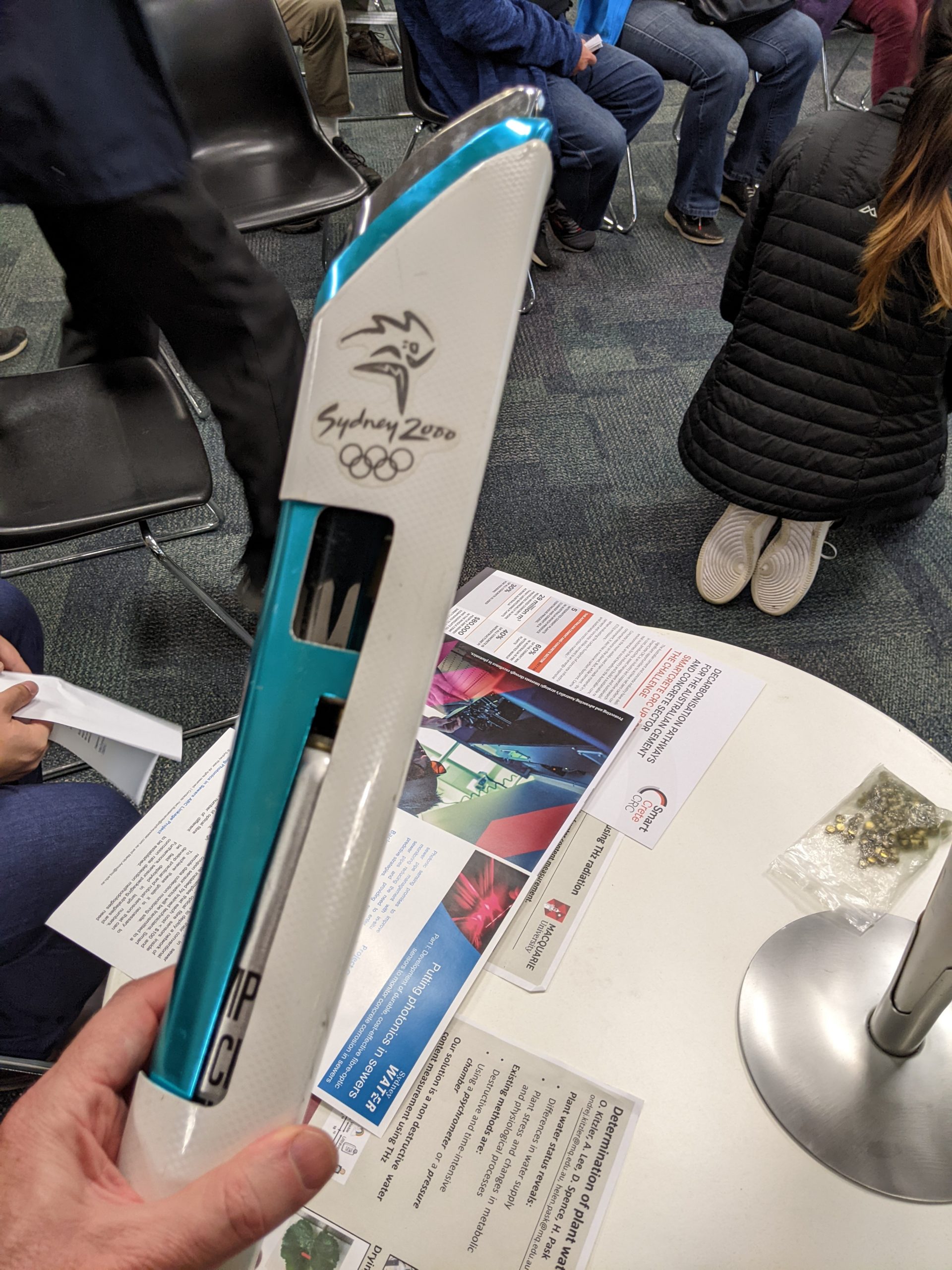
The torches include laser-engineered 78μm holes to regulate the gas from the tiny canister. The same tech was used in Athens in 2004:
There was much more to see and discuss during the evening, and there is a huge amount of interesting research and industrial activity going on in this area (lots of work available too!) The Society thanks Professor Pask and her team for staying back late to do this for us, and wish them every success in their research. You can see more of her work here.
Thanks too to Jeff VK2MZZ for organising the visit.
Update: Society VP Mike VK2MDB formally thanked Professor Pask:
Dear Helen,
On behalf of the Manly-Warringah Radio Society I would like to thank you and your colleagues for hosting us last night. The hologram, demonstrations and presentations were excellent. It was inspiring to learn about the world-class laser research being undertaken by your group. Everyone found it of great interest.
Thanks also for refreshments you laid on for us.
Best wishes for ongoing success.
Dr Michael du Plessis VK2MDP
Vice-President Manly-Warringah Radio Society
…and she responded:
Dear Michael,
Many thanks for your kind works which I’ve passed on to Ondra, Rich and Richard. We really enjoyed having an audience that was so interested and so full of questions.
Cheers,
helen
No Comments Yet