
My latest project is a 40 metre band direct conversion receiver. It is based on a circuit gleaned from the internet and built entirely from junk box components. The receiver was built as a prototype because I was uncertain as to how much experimentation was going to be necessary in order to get it going. There were some design concepts that make this receiver a little different to the usual direct conversion radio.
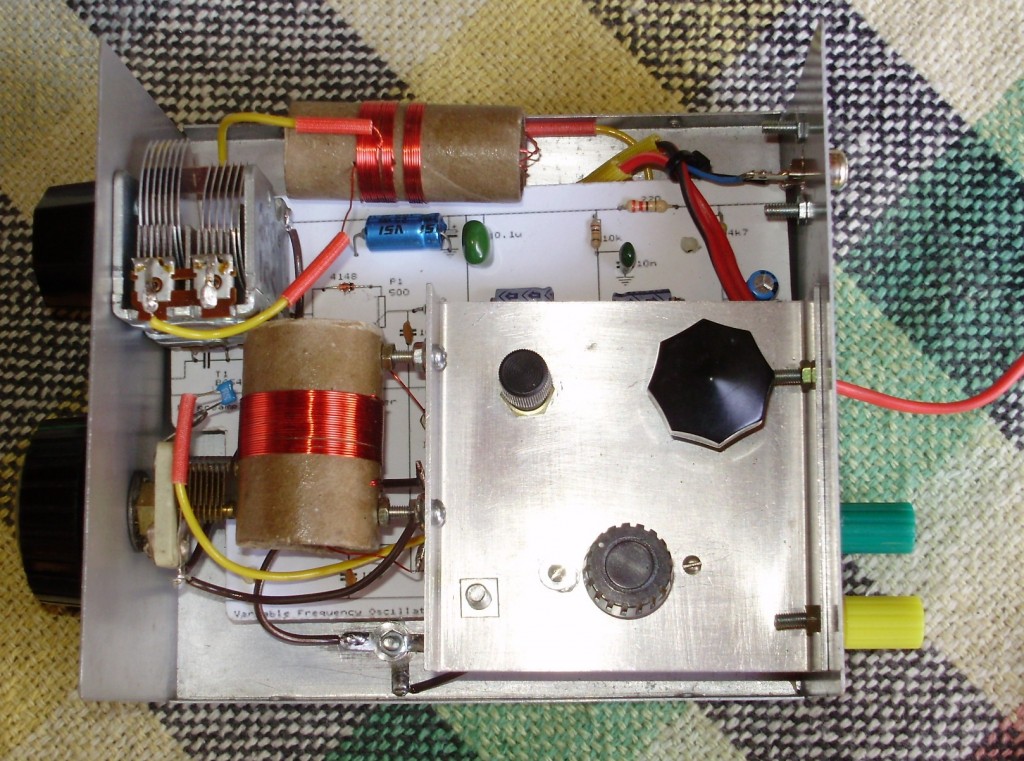
The circuitry consists of a tuned RF amplifier, an “RA3AAE mixer”, a variable frequency oscillator (VFO) and a two stage audio amplifier. Four BC547 transistors are used, plus a handful of resistors and capacitors, two diodes and two coils. The mixer stage consists of two anti-parallel diodes fed by the VFO operating at half the received signal frequency. There are three internal preset controls, a 500 ohm pot adjusted to minimise AM detection, a 5000 pot to set the level of oscillator injection into the mixer, and a 100 pF variable capacitor which acts as a band-set tuning control for the VFO.
Not having sufficient knowledge or items readily available to construct a printed circuit board, I printed (on paper) the circuit from my PC, glued it to a piece of cardboard, and made holes for all the components. Credit goes to Mal VK2TMF for coming up with this method of construction! The wiring was duly completed, checked and the receiver tested. Test instruments consisted of a multimeter, signal generator and a frequency counter.
After a bit of tweaking, the set was connected to a transistor amplifier. It came to life and worked beautifully, aside from some hand-capacity effects. A metal box solved this problem. At a recent “show and tell” evening at the club considerable interest was shown, and some comparative tests were made with Russell’s (VK2BYN) new Sony receiver. The stability of my receiver was quite remarkable, not only on SSB but also on CW signals. AM breakthrough proved to be a minor problem at times with the club’s 40m dipole antenna, and further experimentation might be needed here to avoid front-end overload. The problem was not evident with a shorter antenna.
If anyone is interested in obtaining the circuit, 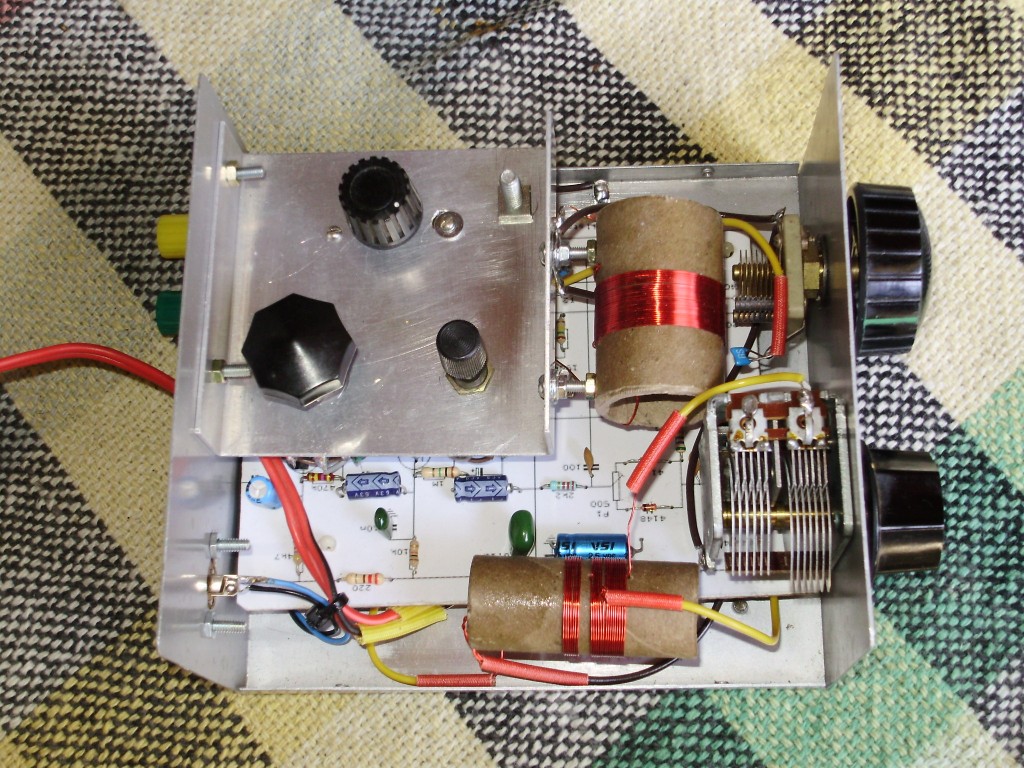 please contact me for details.
Bob VK2RL
Update
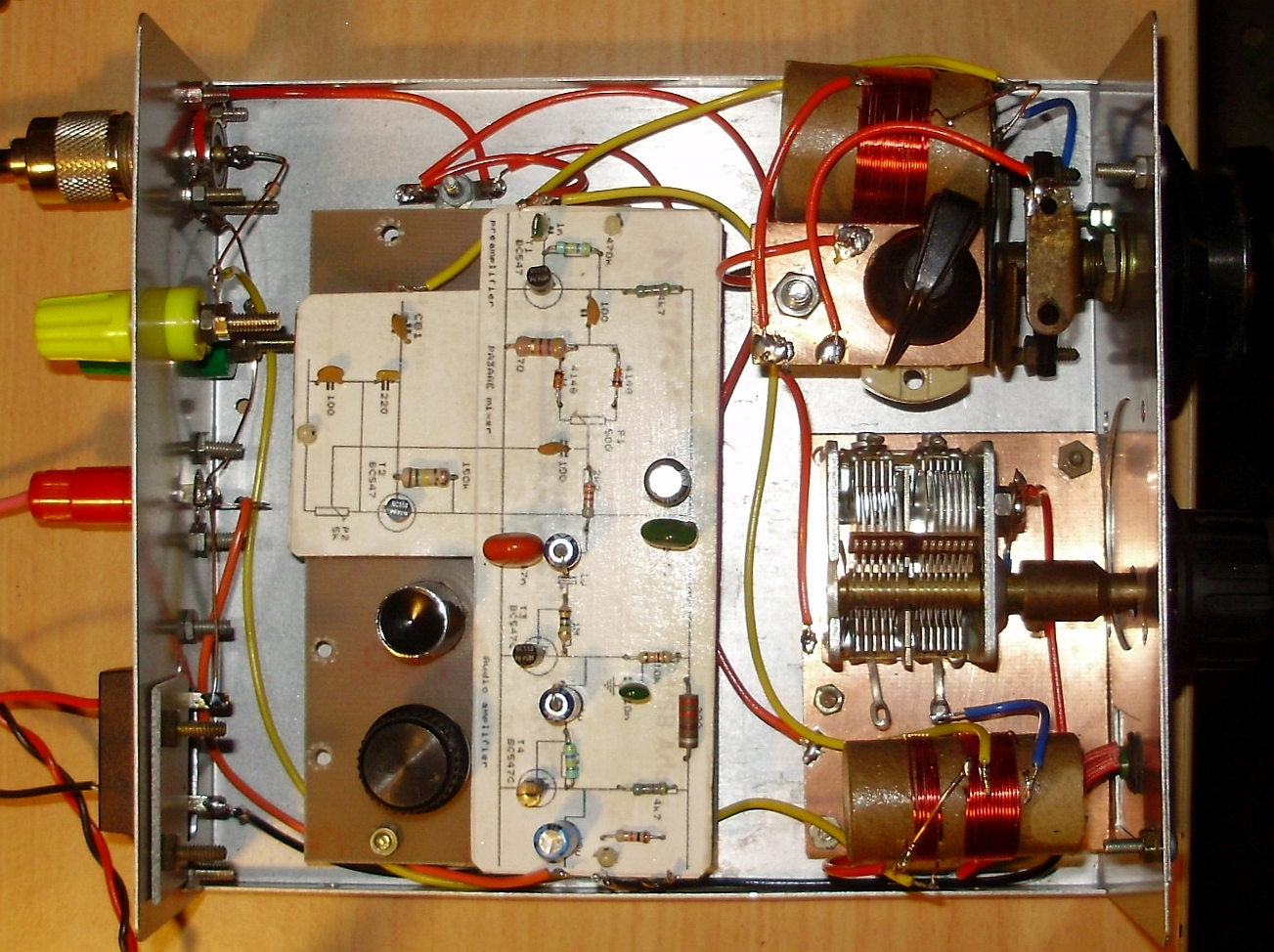
I built a second version of this receiver with a better layout.
hai sir
nice 40m dc receiver. i want circuit details please send me mail
73’s
Hey Daniel..
Check out this page -> http://www.qsl.net/pa2ohh/07swrx1.htm